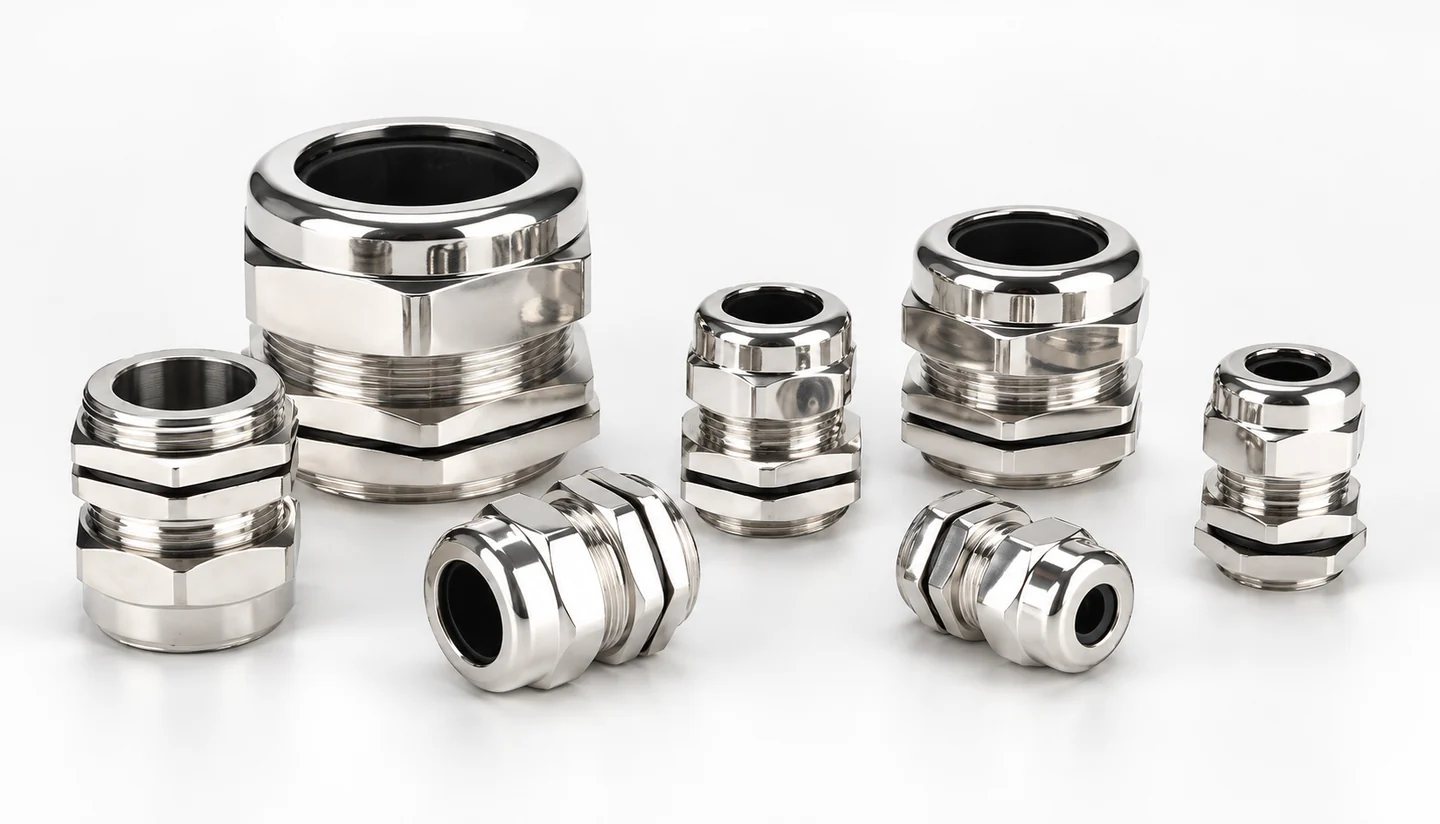
When selecting a cable gland, identify the enclosure-entry thread by its full designation before comparing prices or ordering. Metric, NPT, PG and G describe different thread systems; a similar nominal size or a thread that starts to engage does not prove that two parts are compatible. Confirm the enclosure drawing, thread form and pitch, usable thread length, panel thickness, sealing arrangement, and the product documentation.
This guide explains the practical distinctions behind common cable gland thread types. It is about the gland-to-enclosure interface. It does not establish a cable gland’s ingress rating: that depends on the specified product and the complete installation.

What do metric, NPT, PG and G mean?
- Metric (M): IEC 62444 addresses cable glands with IEC 60423 metric entry threads. IEC 60423 specifies conduit outside diameters and thread dimensions for conduits and associated fittings. Check the actual designation and drawing rather than inferring a size from appearance.
- NPT: ASME B1.20.1 covers dimensions and gauging for general-purpose inch pipe threads, including NPT. A product marked NPT should be matched to the specified NPT size and the enclosure’s corresponding thread.
- PG: PG is a legacy steel-conduit thread designation associated with DIN 40430. If a legacy panel or drawing calls for PG, verify the required size and mating specification directly; do not substitute another system based only on a rough diameter comparison.
- G: G is a parallel pipe-thread designation under ISO 228-1. ISO explains that ISO 228-1 threads are not intended to make a pressure-tight joint on the thread itself; where such an assembly must be pressure-tight, sealing is made at the specified faces with an appropriate seal. For a cable-entry assembly, follow the gland and enclosure manufacturers’ stated sealing method.
Standards define dimensions and scope, but a standard name alone does not establish that a particular gland, enclosure or installed assembly meets a required protection level. Verify the product documents and the requirements for the actual application.
Why “waterproof gland connector” searches need careful interpretation
Buyers may search for a waterproof gland connector or waterproof cable gland connector when they mean a cable gland, a sealed electrical connector, or another cable-entry component. These are not automatically the same product. A cable gland secures and seals a cable entry when used as specified; a plug-and-socket connector joins electrical conductors through a mating interface. Confirm which function the project needs before comparing listings.
A quick compatibility check before ordering
1. Read the enclosure drawing or nameplate. Record the thread system and full size, including any suffix or pitch information. 2. Confirm the mating thread. Check whether the entry is internal or external and whether the gland is specified for that exact thread system. Do not force a part that binds or rocks. 3. Check the mechanical stack-up. Verify usable thread length, panel thickness, locknut clearance, washer or gasket position, and room for the cable bend and tool access. 4. Separate thread fit from cable sealing. The enclosure-entry seal and the cable-clamping seal are separate interfaces. Confirm each against the product drawing and installation instructions. 5. Ask for written confirmation when the marking is unclear. Send the supplier the enclosure thread designation, a drawing or measured sample, cable outside diameter, material needs and application conditions. Request a matching part number and its supporting documentation.
Does a matching thread guarantee a waterproof installation?
No. A thread that mates correctly is only one part of the installation. The gland’s cable range, sealing components, enclosure surface, mounting method, tightening instructions and any required assembly tests must also match the application. Use the stated rating only for the product and installation conditions documented by its manufacturer; do not infer it from the thread type or from a search phrase.
FAQ
Can I replace a metric cable gland with NPT or PG?
Do not assume so. Confirm the thread system and size on both mating components, then follow the enclosure and gland documentation. A similar outside diameter is not a compatibility check.
Is G thread the same as a thread that seals on the thread?
ISO 228-1 describes parallel fastening threads where the pressure-tight joint is not made on the thread. The intended sealing surfaces and seal must be specified for the application.
What information should I send for a cable gland quotation?
Provide the enclosure-entry thread designation and drawing, panel thickness, cable outside-diameter range, material requirements, environment, quantity and any required certificates or test documentation. Ask the supplier to confirm the exact part number and compatibility in writing.
References
- IEC 62444:2010 — Cable glands for electrical installations
- IEC 60423:2007 — Conduit outside diameters and threads for conduits and fittings
- ASME B1.20.1 — Pipe Threads, General Purpose, Inch
- DIN 40430:1971-02 — Steel Conduit Thread; Dimensions
- ISO 228-1:2000 — Pipe threads where pressure-tight joints are not made on the threads
For a specification check, send HUSI the cable diameter, enclosure-entry thread, panel thickness, material requirements and quantity through the contact page.